Shipyard, from the Last Ship
The Winner Takes it All from Mamma Mia
Friday, January 29, 2016


Wednesday, January 6, 2016
Thoughts on the economics conference (ASSA) and San Francisco
The ASSA
conference in early January is the biggest economics conference each year. Thousands of economists descended this year
to San Francisco for three days of fun and frivolity. (OK, three days of learning about new models,
statistical methods, and results – but that’s the same thing, right?) I was a discussant for one paper and presented
a poster on Broadway Economics. I also
saw several good presentations where I learned some things, worked on projects
with my co-authors, and met several interesting people. It was a fantastic conference.
San
Francisco, however? What a dump. Coming in on the BART (their train), you see
many run-down houses that still cost a fortune, because of the insane
property restrictions. It makes you
wonder why anyone would live there. Of
course, it might be because they love being accosted by beggars on their dirty
streets. Between the griminess, the
beggars, the high property values, high taxes (even on plastic bags - which costs lives), and the other ways it restricts liberty, San
Francisco might be my least favorite US city.
It is even in the running with Mexico City and Naples, Italy as far as
places I most want to avoid. (Although
I did like Fisherman’s Wharf ...)
Friday, January 1, 2016
My 2015 in review - publications
I had another productive year with research and writing. I published four articles for lay audiences and also had four scholarly publications in 2015, with three more scholarly articles that have been accepted but are still forthcoming. Here are the details:
Here are my published opeds or articles for lay audiences:
Here are my scholarly publications:
(And these are forthcoming ...)
Here are my published opeds or articles for lay audiences:
“Economic
Lessons for Children from The Hunger Games.”
Library of Economics and Liberty. December 6, 2015. http://www.econlib.org/library/Columns/y2015/Rousuhungergames.html
“Here’s
what PA should do about the minimum wage.” The Harrisburg Patriot News. February 27, 2015.
“Three
keys to prosperity.” The Philadelphia
Inquirer. January 20, 2015.
“Changing
These Two Laws Would Appropriately Commemorate MLK Day.” The Federalist.
January 19, 2015.
Here are my scholarly publications:
Rousu,
M.C., R. O’Connor, M. Travers, J. Pitcavage, J.F. Thrasher. (2015).
“The impact of free trial acceptance on demand for smokeless tobacco:
Evidence from Experimental Auctions. Harm
Reduction Journal 12(18), http://www.harmreductionjournal.com/content/12/1/18
Rousu,
M.C., J. Corrigan, D. Harris, J. Hayter-Kerns, S. Houser, B. LaFrancis, O.
Onafowora, A. Hoffer, G. Colson. (2015). “The impact of monetary incentives on game
performance and classroom learning.” Journal of Economic Education 46(4)
341-349.
Rousu,
M.C., J Corrigan, G. Colson, C. Grebitus, M. Loureiro. (2015).
“On developing guidelines for use of deception in agricultural and
applied economics.” Applied Economics Policy and Perspectives 37 (3) 524-536.
Rousu,
M., D. Ramsaran, and D. Furlano. (2015). “Guidelines for conducting economic impact
studies on fracking.” International Review in Economic Research,
21 (2): 213-225.
Colson, G., J. Corrigan, C. Grebitus, M.
Loureiro, M. Rousu. (2015). “Which deceptive practices, if any, should be allowed
in experimental economics research? Results from surveys of applied
experimental economists and students.” Forthcoming at the American Journal of Agricultural Economics.
Ramsaran
D. and M. Rousu. (2015). “Experiencing the
Impact of Marcellus Shale: A Case Study.” Forthcoming at International Journal of Social Economics.
Rousu,
M. (2015). “Fifteen Years of
Experimental Auctions of GM Foods: What have we Learned About Policy,
Preferences, and Auction Design?”
Forthcoming at Agbioforum.
Thursday, December 31, 2015
My 2015 in Broadway shows
2015 was a great year in many ways. As far as musicals go, this year I launched Broadway Economics, which is designed to help teach economics through showtunes.
I also saw more shows in NYC this year than in any previous year (seven). Here are the shows in order I saw them:
1. On the Twentieth Century

Very entertaining show - saw Kristen Chenoweth and Andy Karl in performances that earned them both Tony nominations. It also has the song Five Zeroes, which will be going on Broadway Economics soon.
2. Honeymoon in Vegas
Great show that unfortunately couldn't gain traction in NYC. Fortunately, the low demand meant we got 6th row seats for almost nothing by going through the "rush" tickets line. My kids got to meet Nancy Opel after the show. Also - The Airport Song is a great song illustrating price discrimination that is featured on Broadway Economics.


3. Something Rotten
Fantastic and hilarious show! Also has a couple songs featured on Broadway Economics (Welcome to the Renaissance and A Musical).

4. Fun Home
The show that won the Best Musical Tony in 2015 was quite good. Again, it features a song that is on Broadway Economics.
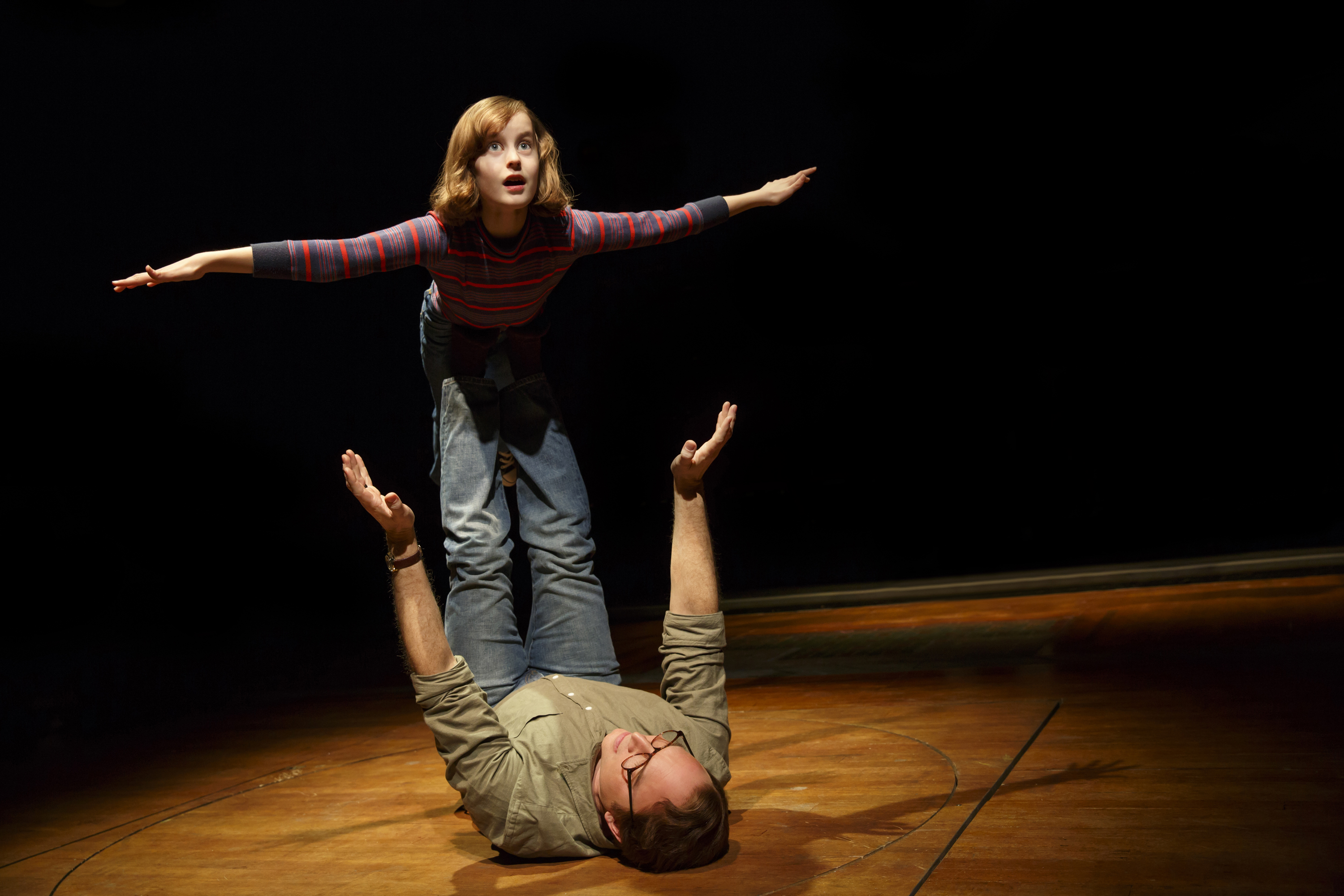
5. The King and I
What I found fascinating about this show, other than its outstanding quality, was that it was at the Lincoln Center. That theater's operational model seems quite different from many, as they rely on many donations. (And they get A LOT of big donations.) It shows with the casting - as The King and I had a large cast, which isn't cheap.

6. Spring Awakening
This was an all-deaf cast, which made for an interesting musical. I have a song how has hearing aids, so I really wanted to see this show. I'm not a big fan of the music or the story, for that matter. (Full of cliches about how mistreated kids ar
e ...) But the acting was pretty amazing. Seeing the acting in sign language, with a perfectly silent theater, was powerful and well worth the trip.
7. Dames at Sea

What else did I see this year?
1. Ham for Ham
My wife and I saw this performance of Ham for Ham. (And our family is going to Hamilton in February!)
4. You're a Good Man,Charlie Brown (local production)
My favorite show of the year! I might be biased, however, as my three kids all had roles.
5. The 25th Annual Putnam County Spelling Bee (local production)
I also saw more shows in NYC this year than in any previous year (seven). Here are the shows in order I saw them:
1. On the Twentieth Century
Very entertaining show - saw Kristen Chenoweth and Andy Karl in performances that earned them both Tony nominations. It also has the song Five Zeroes, which will be going on Broadway Economics soon.
2. Honeymoon in Vegas
Great show that unfortunately couldn't gain traction in NYC. Fortunately, the low demand meant we got 6th row seats for almost nothing by going through the "rush" tickets line. My kids got to meet Nancy Opel after the show. Also - The Airport Song is a great song illustrating price discrimination that is featured on Broadway Economics.


3. Something Rotten
Fantastic and hilarious show! Also has a couple songs featured on Broadway Economics (Welcome to the Renaissance and A Musical).
4. Fun Home
The show that won the Best Musical Tony in 2015 was quite good. Again, it features a song that is on Broadway Economics.
5. The King and I
What I found fascinating about this show, other than its outstanding quality, was that it was at the Lincoln Center. That theater's operational model seems quite different from many, as they rely on many donations. (And they get A LOT of big donations.) It shows with the casting - as The King and I had a large cast, which isn't cheap.
6. Spring Awakening
This was an all-deaf cast, which made for an interesting musical. I have a song how has hearing aids, so I really wanted to see this show. I'm not a big fan of the music or the story, for that matter. (Full of cliches about how mistreated kids ar
e ...) But the acting was pretty amazing. Seeing the acting in sign language, with a perfectly silent theater, was powerful and well worth the trip.
7. Dames at Sea
What else did I see this year?
1. Ham for Ham
My wife and I saw this performance of Ham for Ham. (And our family is going to Hamilton in February!)
2. Once, the Musical (on tour)
3. Matilda, the Musical (on tour)
4. You're a Good Man,Charlie Brown (local production)
My favorite show of the year! I might be biased, however, as my three kids all had roles.
5. The 25th Annual Putnam County Spelling Bee (local production)
Tuesday, December 29, 2015
Should Deception in Experiments be Allowed? - My New Paper at the AJAE
Link here
This was collaborative research with my coauthors and friends Greg Colson, Jay Corrigan, Carola Grebitus, and Maria Loureiro.
Abstract
Deceptive experimental practices are banned in some professions but are standard in others. Recently, the journals of the Agricultural and Applied Economics Association introduced guidelines that allow researchers to publish articles that use some forms of deception. However, in their present form, these guidelines leave room for interpretation. This situation is not ideal for researchers, and a clearer definition of which deceptive practices should be banned could be beneficial. Our aim is to help provide greater clarity and potential guidance for journal policies regarding deception by using the results of surveys of both researcher and student subjects. Evaluating ten potentially deceptive experimental techniques, we find consistent support for banning certain practices while allowing others.
This was collaborative research with my coauthors and friends Greg Colson, Jay Corrigan, Carola Grebitus, and Maria Loureiro.
Abstract
Deceptive experimental practices are banned in some professions but are standard in others. Recently, the journals of the Agricultural and Applied Economics Association introduced guidelines that allow researchers to publish articles that use some forms of deception. However, in their present form, these guidelines leave room for interpretation. This situation is not ideal for researchers, and a clearer definition of which deceptive practices should be banned could be beneficial. Our aim is to help provide greater clarity and potential guidance for journal policies regarding deception by using the results of surveys of both researcher and student subjects. Evaluating ten potentially deceptive experimental techniques, we find consistent support for banning certain practices while allowing others.
Tuesday, December 22, 2015
The best books I read in 2015
Here is the list of books I read this year. Note - these are books I read in 2015, but some came out prior to this year.
The books I recommend, either because I learned from them or because they were entertaining (or both) - in no particular order:
1. The Century Trilogy by Ken Follett. These three (very large) books are historical fiction. I found the stories fascinating. On top of that, I learned a bit about what life might have been like at various points and places in the 20th century. On top of that, there are many good economic lessons one can learn from these books.
2. By the People by Charles Murray. Outstanding book. A bit depressing, as it is quite convincing in how the American dream - in terms of how it was initially considered - is dead. But it also shows a game plan for winning it back.
3. Misbehaving by Richard Thaler. He's a bit arrogant and overstates his case in many places, but it serves as nice overview of behavioral economics.
4. The Business of Broadway by Mitch Weiss. Great book for Broadway fans who like learning about the business side of things.
5. Money: Master the Game by Tony Robbins. He is good and offers great advice. I'm going to have my kids read this.
Last, but not least:
6. The Survivor (Mitch Rapp novel) by Vince Flynn and Kyle Mills. One of my favorite book series ever has continued after the tragic early death of Vince Flynn. I was skeptical before it came out, but found this as enjoyable as the previous books.
Some other books:
1. The new Krugman book. I'm not a Krugman fan. This was no worse than his other books, and definitely better than his NY Times columns.
2. The new Stiglitz book. This was worse than his other books, but largely because it was just a collection of his columns. If you want a drinking game, take a shot every time he says George W. Bush gave "tax cuts for the rich" (with no supporting evidence to defend his claim).
3. Chicagonomics. This book was OK, but I was hoping for more. I did enjoy his interview transcripts at the end of the book most. Admittedly, I didn't finish this. Just couldn't keep my attention well enough. (Although I skipped to the end for the interviews.)
4. Cockpit Confidential. It wasn't bad, but I stalled part-way through and didn't finish.
5. Real Dissent. Same as #4.
The books I recommend, either because I learned from them or because they were entertaining (or both) - in no particular order:
1. The Century Trilogy by Ken Follett. These three (very large) books are historical fiction. I found the stories fascinating. On top of that, I learned a bit about what life might have been like at various points and places in the 20th century. On top of that, there are many good economic lessons one can learn from these books.
2. By the People by Charles Murray. Outstanding book. A bit depressing, as it is quite convincing in how the American dream - in terms of how it was initially considered - is dead. But it also shows a game plan for winning it back.
3. Misbehaving by Richard Thaler. He's a bit arrogant and overstates his case in many places, but it serves as nice overview of behavioral economics.
4. The Business of Broadway by Mitch Weiss. Great book for Broadway fans who like learning about the business side of things.
5. Money: Master the Game by Tony Robbins. He is good and offers great advice. I'm going to have my kids read this.
Last, but not least:
6. The Survivor (Mitch Rapp novel) by Vince Flynn and Kyle Mills. One of my favorite book series ever has continued after the tragic early death of Vince Flynn. I was skeptical before it came out, but found this as enjoyable as the previous books.
Some other books:
1. The new Krugman book. I'm not a Krugman fan. This was no worse than his other books, and definitely better than his NY Times columns.
2. The new Stiglitz book. This was worse than his other books, but largely because it was just a collection of his columns. If you want a drinking game, take a shot every time he says George W. Bush gave "tax cuts for the rich" (with no supporting evidence to defend his claim).
3. Chicagonomics. This book was OK, but I was hoping for more. I did enjoy his interview transcripts at the end of the book most. Admittedly, I didn't finish this. Just couldn't keep my attention well enough. (Although I skipped to the end for the interviews.)
4. Cockpit Confidential. It wasn't bad, but I stalled part-way through and didn't finish.
5. Real Dissent. Same as #4.
Monday, December 7, 2015
Economic Lessons for Children from the Hunger Games
My newest paper has been published at Econlib.org, the Library of Economics and Liberty. It is titled Economic Lessons for Children from the Hunger Games. I'm quite excited to have a paper there, as I read it daily and really respect the writers on that website. Further, Susquehanna University was fortunate enough to have David Henderson visit our campus last January.
As far as the article, here is the link.
An excerpt:
As far as the article, here is the link.
An excerpt:
While I've found these books and movies entertaining, the value of this enterprise isn't limited to entertainment. The Hunger Games might contain the best depiction of communism and its cousin—socialism—ever provided in a best-selling novel. Given the national popularity of self-avowed socialist Bernie Sanders and others who want increased government control over our lives, the lessons from these books are quite timely and desperately needed. The political and economic lessons fromThe Hunger Games are so relevant that our children, and pretty much everyone else, would do well to read them.
Subscribe to:
Posts (Atom)
